

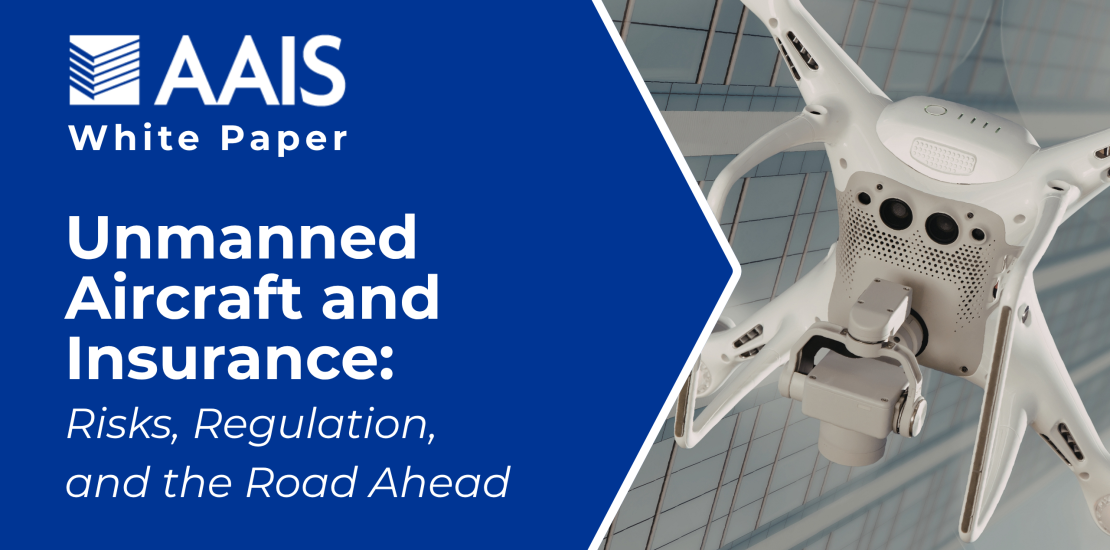
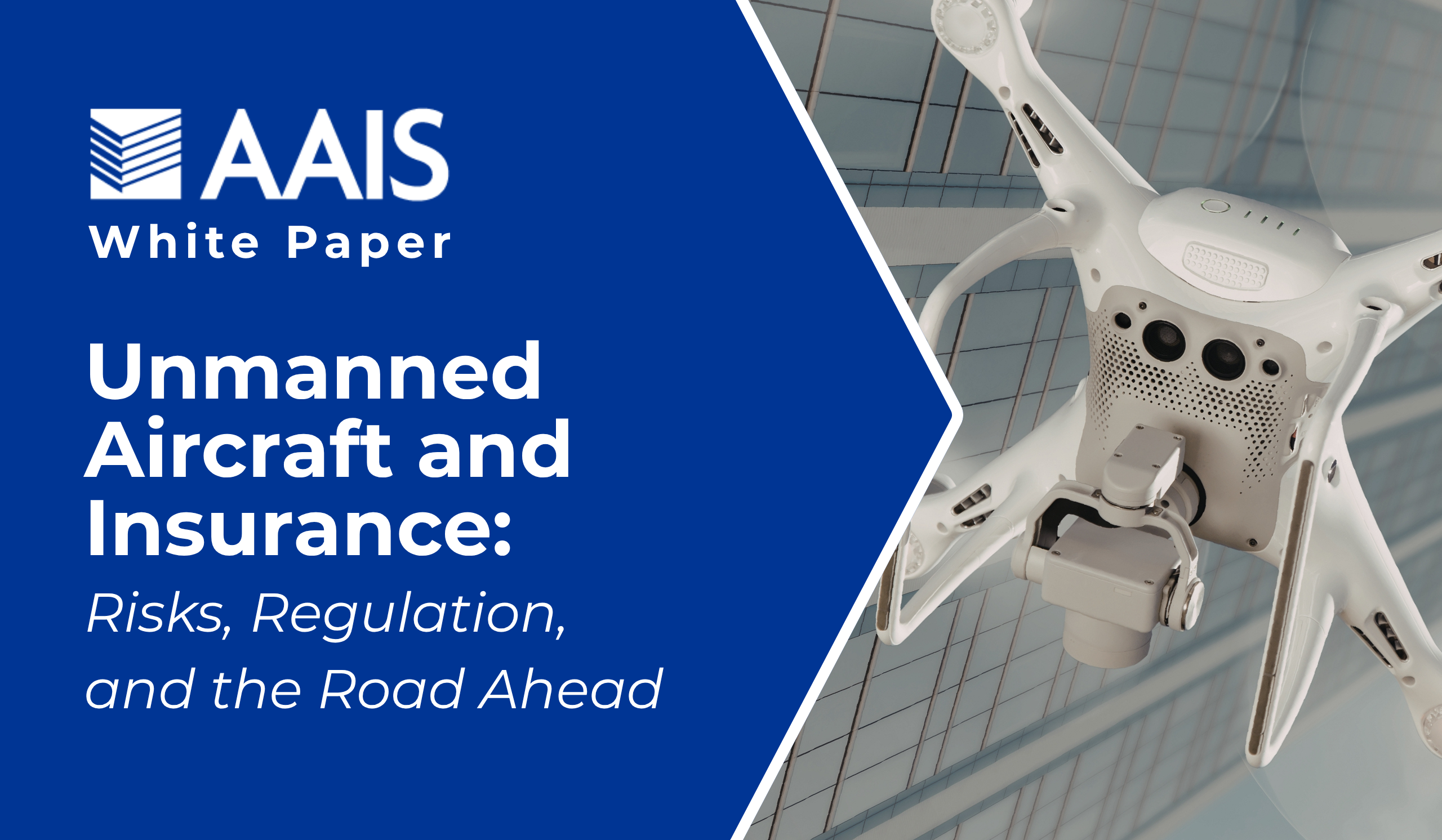
Unmanned aircraft (UA), known colloquially as unmanned drones, have rapidly evolved from military technology into widely used tools across commercial, recreational, and governmental sectors. Their ability to capture data, access hazardous environments, and operate with precision has driven widespread adoption across industries including agriculture, logistics, and construction. Today’s unmanned aircraft operators can choose from a variety of UA types, ranging from small multi-rotor craft to fixed-wing and hybrid systems.
As unmanned aircraft become more integrated into the United States’ airspace, the regulatory, operational, and risk landscapes have grown increasingly complex. The Federal Aviation Administration (FAA) regulates how unmanned aircraft may be used and by whom, while privacy expectations and liability exposures introduce new challenges for operators and insurers alike.
This white paper provides a comprehensive exploration of unmanned aircraft systems through multiple lenses: their uses, history, mechanics, regulatory environment, property and liability perils, underwriting considerations, privacy implications, and future technological evolution.
Click below to download your copy.